Online Tendering Process: How eTendering Makes Procurement Faster, Transparent and More Efficient
By Balizana Technologies LLP
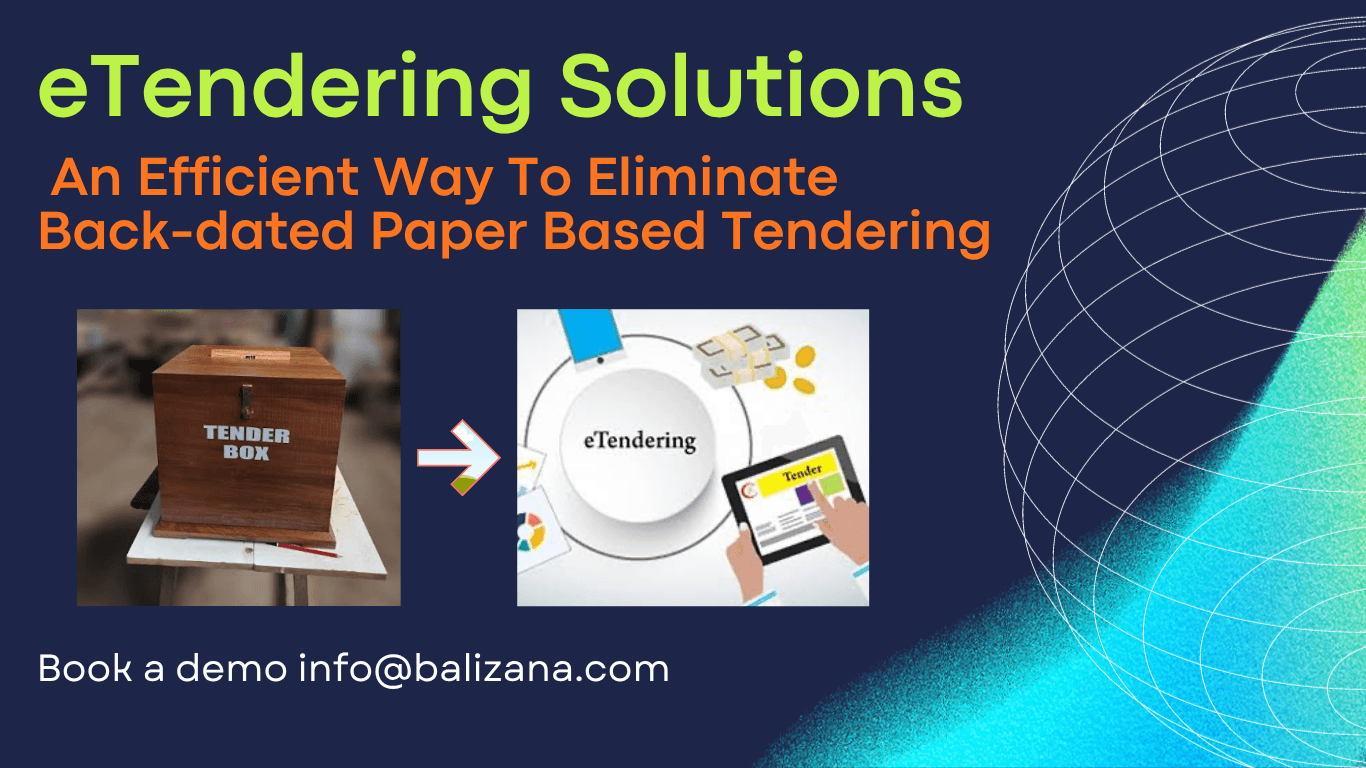
Online Tendering: From Paper-Based Procurement to Digital Procurement
Procurement is one of the most important functions in any organisation.
Whether it is a manufacturing company, PSU, government organisation, EPC company, hospital, educational institution or large enterprise, organisations regularly need to purchase materials, equipment, services, works and other requirements from suppliers.
Traditionally, tendering involved a lot of paperwork, physical documents, emails, manual approvals and repetitive data entry.
This approach may work for a small number of tenders, but as procurement volumes increase, managing everything manually can become difficult.
This is where online tendering or e-Tendering becomes valuable.
An online tendering system brings the tendering process onto a digital platform—from requirement creation and approvals to tender publication, vendor participation, bid submission, evaluation and award.
The Government of India's eProcurement system describes eProcurement as purchasing items electronically through the internet and highlights benefits such as reduced tender cycle time, lower indirect costs and improved transparency.
But there is something more important.
e-Tendering is not simply about replacing paper with a computer screen. It is about redesigning the procurement process to make it more controlled, transparent, traceable and efficient.
What Is an Online Tendering Process?
The online tendering process is a digital method of inviting suppliers or contractors to submit bids for the supply of goods, services or execution of works.
Instead of managing tender documents manually, the organisation uses an e-Tendering software or online tender management system to manage the complete process.
A typical online tendering workflow may look like this:
Requirement → Approval → Tender Creation → Tender Publication → Vendor Registration → Bid Submission → Technical Evaluation → Financial Evaluation → Comparison → Reverse Auction, if applicable → Approval → Award
The exact workflow varies according to the organisation's procurement policy, tender type and applicable rules.
The major advantage is that information, documents, approvals and actions can be managed within one controlled digital environment.